
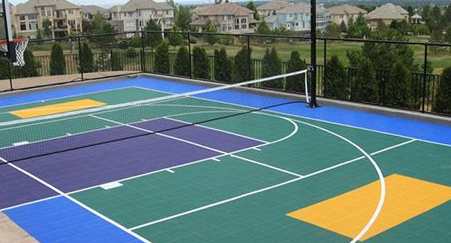
If you grew up playing basketball or tennis on a hard cement slab, you probably remember two things:
-
the fun
-
the sore knees
Today, there’s a much better option: sport courts — modular, cushioned surfaces designed specifically for athletic play. Whether it’s for a home, school, park, or community center, sport courts offer big advantages over traditional cement courts.
Here’s why upgrading to a sport court is a smart move.
1. Easier on Joints and Bodies
Cement doesn’t care about your ankles. Sport courts do.
Sport court systems are engineered with shock absorption and light cushioning built into the surface. That means:
-
Less impact on knees, hips, and lower back
-
Reduced fatigue during long games or practices
-
More comfortable play for kids, adults, and older athletes
Instead of feeling beat up after an hour of play, athletes can play longer and recover faster.
2. Better Traction, Better Performance
Cement can be slick when dusty, muddy, or wet — not ideal for quick stops, pivots, or jumps.
Sport courts are designed for athletic traction, helping players:
-
Change direction quickly
-
Stop and start without sliding
-
Maintain better grip in a range of conditions
That translates directly into better performance and fewer falls.
3. Safer Playing Surface
With cement, a hard fall is really a hard fall.
Sport courts are built with safety in mind:
-
Slight flex and give in the surface
-
Fewer abrasions from sliding or tripping
-
Less risk of long-term wear and tear on joints
For schools, parks, HOAs, and families, that added level of safety is a huge benefit. It’s not just about fun — it’s about protecting the people who use the court.
4. All-Weather Playability
Rain + cement = slippery, puddle-filled mess.
Many sport courts are designed with built-in drainage and textured surfaces so water doesn’t sit on top as easily. That means:
-
Faster drying after rain
-
Fewer slick spots
-
More days per year that the court can actually be used
Instead of waiting for a slab to dry and sweep off water, players can get back to the game sooner.
5. Customizable for Different Sports
Cement is just… cement.
Sport courts can be custom designed for the sports you actually play:
-
Basketball
-
Pickleball
-
Tennis
-
Volleyball
-
Multi-sport courts with multiple game lines
You can add:
-
Different color zones
-
Multiple sets of game lines
-
Logos or branding in the center or key areas
That turns a plain slab into a professional-looking, multi-use sports space.
6. Looks Way Better Than a Plain Slab
Let’s be honest: a gray cement court doesn’t exactly scream “come play.”
Sport courts bring color and design to the space:
-
Clean, vibrant game lines
-
Color-contrasted playing areas (like the keys, three-point area, or service boxes)
-
A polished, intentional look instead of a leftover parking lot
For homes, schools, and communities, that visual upgrade makes the whole property feel more modern and inviting.
7. Less Cracking, Chipping, and Ugly Repairs
Cement cracks. It’s not if, it’s when.
Those cracks can:
-
Trip players
-
Affect ball bounce
-
Collect weeds and debris
-
Be expensive and messy to repair
Sport courts use modular tiles or specialized sport surfaces that can flex slightly with temperature changes and ground movement. If a section is damaged, you can often replace just that area instead of resurfacing the entire court.
That means:
-
Fewer major repairs
-
Easier maintenance
-
A court that looks good for years
8. Lower Noise Compared to Cement
Cement courts can be loud — especially in neighborhoods or near homes. Constant pounding and echoing ball noise can get old fast.
Sport courts often absorb more sound than bare concrete, which means:
-
Quieter gameplay
-
Happier neighbors
-
Less echo from bouncing balls
It’s a small detail that makes a big difference in shared spaces.
9. More Versatile for Families & Communities
A traditional cement court is usually dedicated to one main use. A sport court can be truly multi-purpose, perfect for:
-
Basketball one day
-
Pickleball the next
-
Kids’ games, fitness workouts, or family gatherings
-
Training and drills for multiple sports
You’re not just building a “basketball court” — you’re creating a flexible activity space for everyone.
10. Adds Value and “Wow” Factor
A well-installed sport court can:
-
Make a home more attractive to active families
-
Boost the appeal of HOAs, apartment communities, and schools
-
Give parks and recreational centers a modern, professional look
It’s the kind of upgrade people notice and remember:
“That’s the place with the cool court.”
Final Thoughts: More Than Just a Surface
Choosing a sport court over a plain cement court isn’t just about looks. It’s about:
-
Safety – softer on joints, better traction, fewer injuries
-
Performance – better play, better ball response, better confidence
-
Longevity – less cracking, easier repairs, better long-term value
-
Enjoyment – more fun, more comfort, more time spent actually using the court
If you’re thinking about building or upgrading a court, a sport court is an investment in the people who will use it — kids, adults, athletes, and weekend warriors alike.